Scandinavian Activewear Brand: Organic Search Became the #1 Sales Channel in 6 Months
Scandinavian Activewear · D2C Shopify
The Challenge
A new Scandinavian activewear label launched in February 2026 with a strong product but zero visibility on Google. It sat on page 2 and 3 of search results, brought in only a trickle of weekly visits, and made no sales from organic search.
The Solution
Cogny ran weekly analysis from day one across SEO, conversion, audience, and e-commerce data. Every week, the team got a short list of the most important things to fix next. They executed, the changes compounded — and six months in, organic search is the brand's largest sales channel, driving half of all orders without a euro of ad spend.
Background
A new Scandinavian activewear label launched commercially in February 2026. Good product, clean Shopify storefront. The problem was the one every new D2C brand faces on day one: nobody was searching for them, and Google had no reason to rank them.
Six months later, monthly orders are 13–17× the launch baseline, and organic search is the brand's single largest sales channel — half of all tracked orders and roughly two thirds of tracked revenue — built without spending a euro on ads.
Before vs. After
| At launch (Feb 2026) | Six months in (Aug 2026) | |
|---|---|---|
| Where they ranked on Google | Page 2 to 3 | Top of page 1, stable for 3 months |
| Weekly Google impressions | Baseline | 25× higher |
| Weekly clicks from Google | Baseline | 18× higher |
| Monthly orders | Baseline | ~13–17× higher |
| Share of orders from Google Organic | 0% | 50% |
| Share of tracked revenue from Google Organic | 0% | 63% |
| Countries reached in search | Sweden only | 90+, led by the US, Germany, the UK, Korea, and Canada |
Data sources: Google Search Console (Feb–Aug 2026) and GA4. Revenue and order figures are GA4-tracked; GA4 typically undercounts against the shop's own records, so the true numbers are likely somewhat higher. Roughly a quarter of orders carry no attribution (most likely direct and email traffic), so channel shares are of attributed activity.
How It Happened — Four Phases
1. Diagnosis (Feb–Apr). Cogny's weekly analysis found the launch-stage classics: no content ranking for anything, broken product schema, a bot-traffic source inflating analytics by a third or more, and email tracking that was silently disabled. Fixing what the data lies about came before optimising anything.
2. Technical foundations (early May). Product structured data, Organization schema completeness lifted from 20% to 85%, and metadata rewritten across every important product page — written for the queries that actually mattered, not the ones the brand wished mattered.
3. Content compounds (May–Aug). Guides on the brand's real differentiators — lyocell fabric, anti-odour performance, sustainability — reached page 1 and kept climbing. July was the strongest impressions month since launch, and the flagship guide on workout clothes that don't smell became the site's top organic performer.
4. Localisation pays off (ongoing). Korean-language content converts clicks at roughly 10× the rate of comparable English pages, and Korea is now the brand's #4 country by search visibility. The same playbook is being rolled out to the next markets.
Durability, Not a Spike
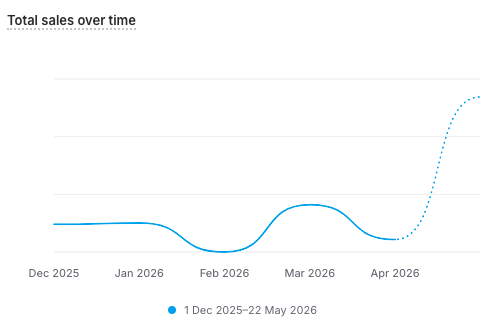
The inflection above shows the launch period — flat through the first quarter, then a clear turn as the search work started converting. What the chart doesn't show is the more important part: it kept going.
The most defensible part of this story is not the multiples — it's that they've held. Impressions, clicks, and average position have all been stable for three to four months, independently verifiable in Search Console. This is a ranking the brand keeps, not a viral blip.
A detail worth noting for where search is heading: orders have started arriving via Perplexity — the same content that ranks on Google is being cited by AI answer engines.
A Note on the Numbers
The growth here is real, but it started from a small base, and August figures are partial (the month is on pace to beat July, but it isn't finished). All revenue is GA4-tracked rather than taken from the shop's books, which if anything understates the result. The point of this story is not any single number — it's that the channel with the best long-term economics went from zero to the brand's primary revenue source in six months of weekly, compounding work.
Key Takeaways
- A new brand starts invisible. The fix is mostly structural: better metadata, product schema, and clean technical foundations. None of it is exotic.
- Weekly beats monthly. When the baseline is changing fast, acting on findings within the same week is what compounds. A monthly review cadence would have lost most of the gains here.
- Data quality first. Bot traffic and broken tracking will silently lie to you about what's working. Fixing that is a prerequisite to optimisation, not a side quest.
- Localise where the data points. The Korean content bet came straight from the search data — and it converts at multiples of the English pages.
- Organic search is the right bet at this stage. Six months in, it's half of all orders at zero ad spend — and the same content is starting to surface in AI search.
Author: Tom Ström, CEO, Cogny Published: 22 May 2026 · Updated: 21 August 2026
Read the full Truth Ledger — 6 months of verified outcomes · All case studies · Pricing